
Stress is an inevitable part of modern life, but did you know it can significantly impact your hair health? Understanding this connection is the first step to addressing stress-related hair problems.
The Stress-Hair Connection: When you're stressed, your body produces cortisol, the stress hormone. High cortisol levels can push hair follicles into the resting (telogen) phase prematurely, leading to increased hair shedding. This condition is called telogen effluvium.
Types of Stress-Related Hair Loss: Telogen Effluvium causes diffuse hair thinning across the scalp. Alopecia Areata is an autoimmune condition triggered by severe stress, causing patchy hair loss. Trichotillomania is a stress-induced urge to pull out one's own hair.
Signs Your Hair Fall is Stress-Related: You notice increased shedding 2-3 months after a stressful event. Hair loss is diffuse rather than in patches. You don't have a family history of hair loss. The hair loss coincides with other stress symptoms.
What You Can Do: Exercise regularly – physical activity reduces cortisol and promotes blood circulation to the scalp. Practice meditation or yoga – even 10 minutes daily can make a difference. Get enough sleep – aim for 7-9 hours of quality sleep. Eat a balanced diet – stress depletes nutrients that are essential for hair health.
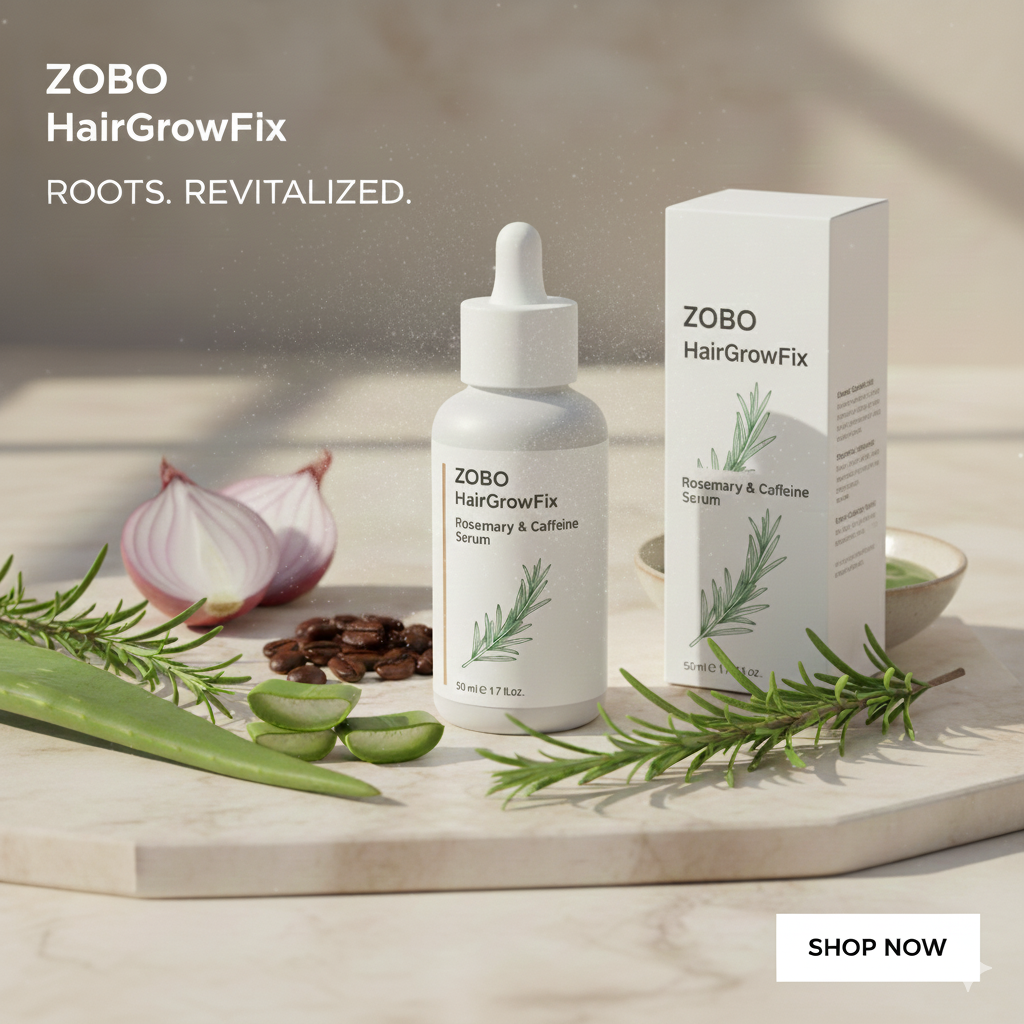
Scalp Care During Stressful Times: Use a gentle, nourishing hair serum like ZOBO HairGrowFix. The Rosemary and Caffeine in our formula help stimulate hair follicles and promote growth. Massage your scalp regularly – this reduces tension and improves blood flow. Avoid harsh chemical treatments during stressful periods.
When to Seek Help: If hair loss is severe or doesn't improve with lifestyle changes, consult a dermatologist. They can rule out underlying conditions and recommend appropriate treatments.
The Good News: Stress-related hair loss is usually temporary. Once the stressor is addressed and you take care of your overall health, hair typically grows back within 6-9 months.